
Evaluating an organisation’s strategic standing is much like navigating a ship through unpredictable waters. The crew cannot rely on clear skies alone; they must read ocean currents, monitor the wind, understand the ship’s condition, and anticipate storms brewing beyond the horizon. Strategic position and risk assessment functions in much the same way, acting as the captain’s navigational compass.
Professionals who refine this strategic mindset through learning avenues such as a business analyst course in chennai gain sharper instincts for interpreting signals, measuring vulnerabilities, and charting safer growth trajectories. Yet the real mastery comes from transforming assessment into a continuous, story-driven exploration of both internal strength and external uncertainty.
Mapping the Vessel: Internal Capability Evaluation
Every organisation is a ship with its own personality. Some are swift and agile, others are robust and built for endurance. Assessing internal capabilities means understanding the structure of this vessel — its engines, its sails, its crew, and its hidden reserves.
This includes evaluating operational efficiency, financial strength, technological maturity, leadership alignment, and organisational culture. Each factor reveals how well-equipped the company is to navigate competitive waters.
Storytelling plays a role here, too. For instance, a company may have engines powerful enough to outrun competitors, yet its crew lacks synchronisation, causing internal friction. Another may have a disciplined, united crew but outdated sails that slow progress. Internal evaluation uncovers these realities without judgment, offering leaders a clear view of their true starting point.
Studying the Ocean: External Market Forces
If internal capabilities represent the vessel, external forces represent the ocean it travels through. Market conditions, consumer behaviour shifts, competitor manoeuvres, regulatory changes, and technological disruptions act as ever-changing tides.
Understanding these forces involves scanning the competitive horizon with disciplined attention. Are new entrants causing waves that disrupt the flow? Are customer expectations pushing the ship toward new directions? Are global economic fluctuations amassing into potential storms?
This outward analysis ensures organisations never navigate blindly. It allows them to position themselves where currents support momentum rather than resist it.
Identifying the Storms: Risk Recognition and Classification
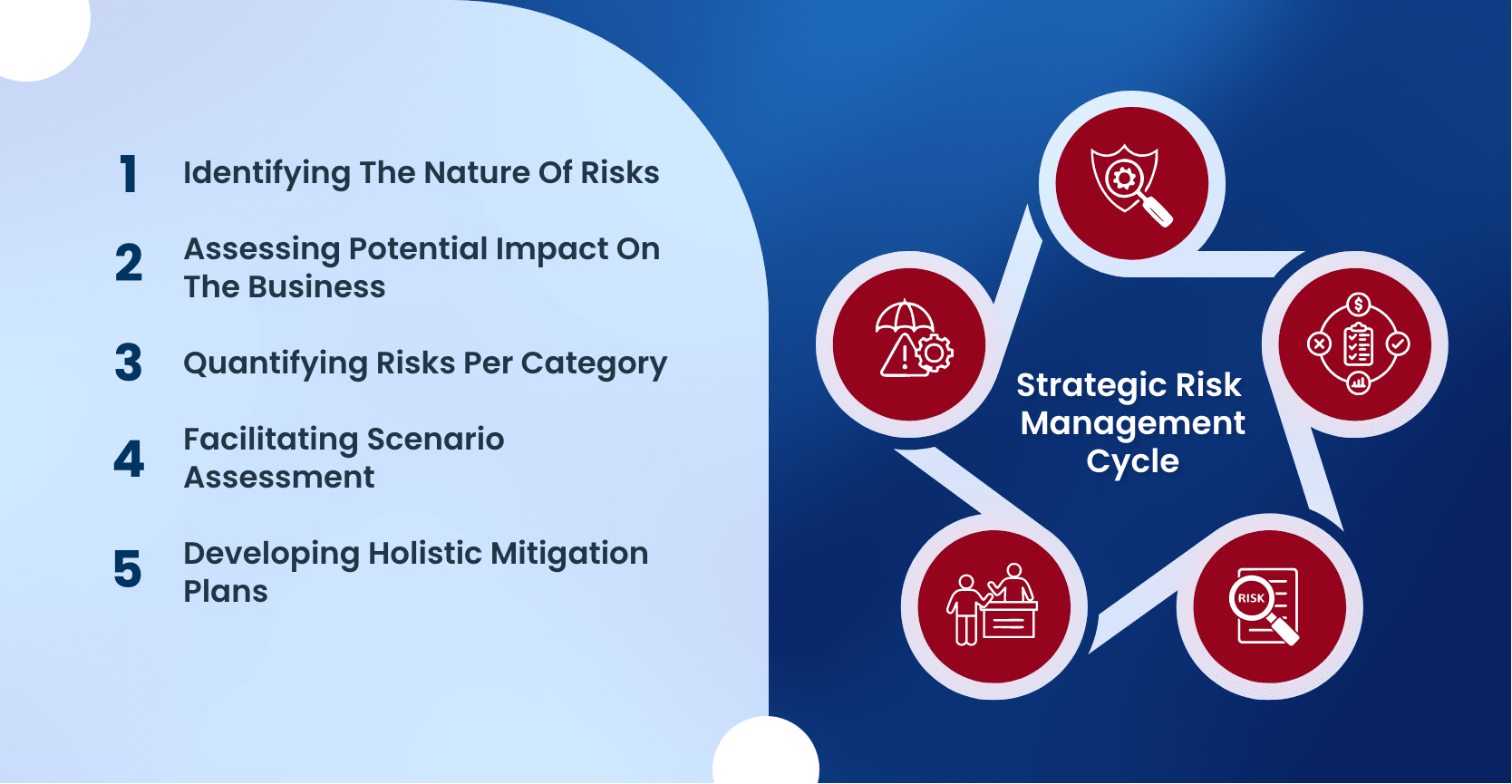
Every ship faces threats — some visible, others hidden beneath the surface. Risk assessment identifies these dangers by categorising them into operational, financial, strategic, technological, and external risks.
This process requires the mindset of a seasoned navigator who knows that danger seldom arrives announced. Risks often take the form of weak partnerships, cyber vulnerabilities, supply chain disruptions, talent shortages, or shifting industry trends.
The objective is not to fear the storms but to understand their potential impact. Which risks could sink the ship? Which would merely slow it down? Which could be transformed into opportunities with the right preparation?
Plotting the Course: Strategic Alignment and Mitigation
Once both internal state and external forces are understood, leaders can chart a course that aligns ambition with reality. This involves strengthening weak capabilities, leveraging competitive advantages, and designing mitigation strategies for identified risks.
Mitigation becomes the protective gear of the organisation — diversifying supply chains, building financial buffers, adopting new technologies, or strengthening governance frameworks.
Here, structured learning pathways such as a business analyst course in chennai often help professionals develop a practical sense of risk prioritisation and opportunity identification that supports long-term strategic positioning.
Building a Resilient Crew: Organisational Agility and Preparedness
Even the best strategy fails without a crew ready to adapt. Organisational resilience depends on how quickly teams can respond to change. Agile decision-making frameworks, cross-functional communication, empowered leadership, and continuous learning create a culture ready to face turbulence.
A resilient organisation is one where every team member becomes an active lookout, aware of risks, prepared for unexpected waves, and committed to maintaining direction despite uncertainty. It is this collective readiness that determines whether a ship merely survives or thrives in competitive waters.
Conclusion
Strategic position and risk assessment is not a static report but a navigational art. It blends inward reflection with outward exploration, helping organisations understand both their vessel and the ocean that surrounds it.
By identifying strengths, recognising vulnerabilities, scanning external forces, and preparing for uncertainties, leaders chart pathways that balance ambition with stability. In a world of shifting tides, the organisations that master this discipline emerge not only resilient but strategically empowered — sailing confidently toward sustainable success.
